Case Studies in Contemporary Use

Different peptide compounds can appear similar in public discussion while occupying very different clinical and evidentiary spaces.

Why Comparison Matters in Peptide Research

Looking at specific peptide compounds makes one point especially clear: peptides do not all belong in the same conversation. While some exist in established clinical settings, others remain under investigation or circulate through online wellness and recovery culture with much weaker validation. Comparing them side by side helps show why therapeutic promise, regulatory status, and public interpretation should not be treated as interchangeable.

Our Case Studies of Research

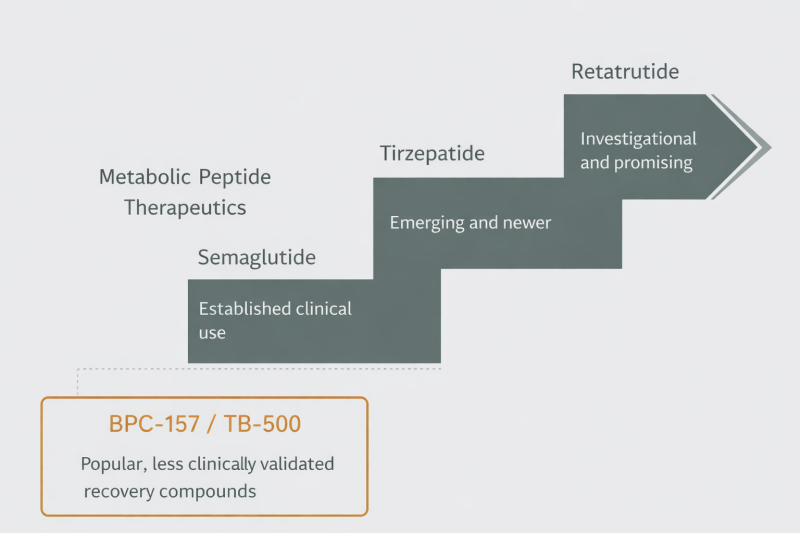
Semaglutide and the Rise of Clinically Established Metabolic Peptides

Semaglutide is a GLP-1 receptor agonist with established clinical use in metabolic disorders. It represents a peptide therapeutic with strong medical grounding and structured evidence. In public discussion, however, it is also frequently associated with weight loss culture, which means it often occupies both a clinical and a cultural role at the same time.

Tirzepatide as a Bridge Between Established and Emerging Therapies

Tirzepatide helps illustrate how quickly peptide therapeutics can evolve once a successful treatment pathway has been established. It represents a newer stage in metabolic drug development, building on the same general clinical momentum that made semaglutide so visible while also pointing toward the increasingly aggressive search for stronger and more effective compounds. In that sense, tirzepatide works well as a midpoint in this section because it shows how the field does not stand still. Newer compounds are constantly being developed, evaluated, and brought into public discussion, often before broader audiences fully understand how they differ from earlier therapies.

Retatrutide and the Next Wave of Clinical Development

Retatrutide is a triple receptor agonist currently under clinical investigation. Early research suggests promising results in obesity pharmacotherapy and glycemic control, but it remains under continued evaluation. It represents a useful example of a compound that has significant scientific interest without yet occupying the same established position as a fully approved therapy.

BPC-157 and TB-500 as Recovery-Focused Gray-Area Compounds

BPC-157 and TB-500 are frequently discussed in recovery, performance, and longevity communities, especially in connection with tissue healing, inflammation reduction, and physical recovery. Yet their clinical grounding remains much more limited than that of approved peptide therapeutics. They illustrate how compounds can gain cultural visibility and consumer appeal even when the level of human validation is far less secure.

What These Examples Reveal About Evidence and Public Perception

Placing these compounds side by side shows why peptide therapeutics cannot be understood as one uniform category. Scientific support, regulatory status, and public interpretation vary widely, even when discussion online treats them as if they belong on the same level. Taken together, these case studies also highlight the speed of peptide development itself. New compounds do not simply replace older ones; they build on them, complicate them, and often enter public conversation before their full clinical meaning is settled.